

A token approval can remain active after the trade that created it is long over. That makes one of DeFi’s most routine clicks a surprisingly durable security decision. Many users assume that connecting a wallet to an app gives it control only for that session; in common token workflows, the more consequential permission is a separate authorization that lets a contract move a particular token from the wallet. The transaction may be legitimate, yet the permission can persist. Understanding that distinction is more useful than treating every approval prompt as either harmless housekeeping or an automatic red flag.
For US-based DeFi users moving among decentralized exchanges, lending protocols, and other EVM-compatible applications, the practical question is not simply, “Is this wallet secure?” It is, “What authority am I granting, to which address, for how long, and what can happen if that contract or interface later becomes unsafe?” A wallet can help make those choices legible, but it cannot make them risk-free.
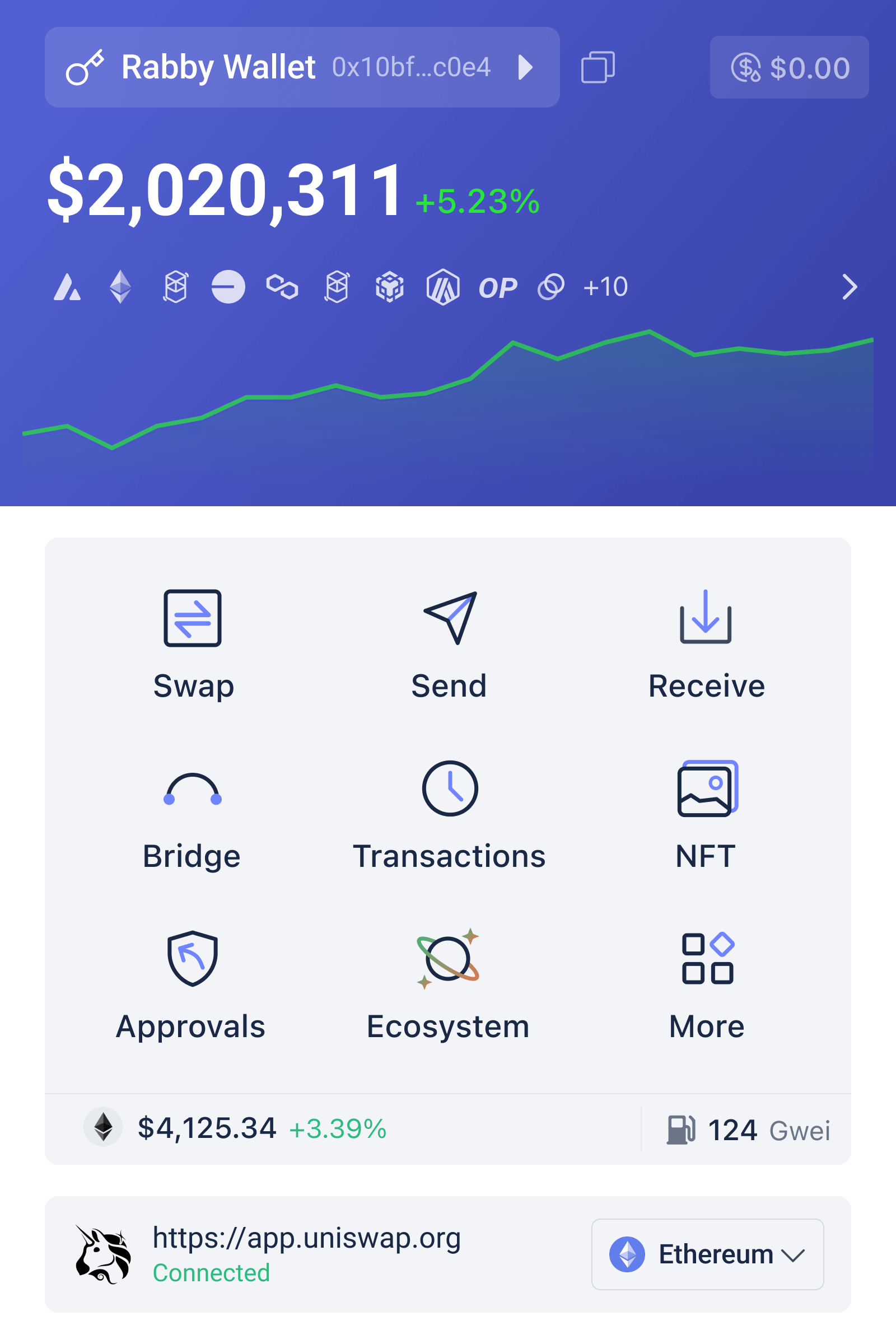
These actions are easy to conflate because both may happen while using the same website. Connecting usually lets an application read public wallet information and request transactions. A token approval is an on-chain instruction—commonly associated with the ERC-20 allowance mechanism—that authorizes a spender contract to transfer a specified token from the user’s address, up to a stated amount.
That allowance is not the same as handing over a private key. The contract does not thereby gain unrestricted control over every asset in the wallet. Its authority is bounded by the token, the spender address, and the approved amount. But those boundaries matter only if the user can identify them and the token contract follows the expected rules. A large or unlimited allowance can expose a substantial balance of that token if the spender is compromised, malicious, or otherwise able to misuse its permissions.
Nor does disconnecting a site necessarily revoke an on-chain allowance. Disconnecting changes the application’s access to the wallet interface; revoking changes a recorded token permission. This is the first useful mental model: wallet connection is a relationship with an interface, while an allowance is a permission recorded by a token contract. One may end without the other.
Approvals exist because a token contract generally needs permission before another contract can transfer tokens on a user’s behalf. A swap, deposit, or other DeFi action may therefore involve an approval transaction before the action itself. That extra step costs time and may incur a network fee. Some applications request a high or effectively unlimited allowance so a user does not need to approve again for every later interaction.
Convenience is real, but it is not free. A smaller allowance can limit the amount exposed to a spender, while requiring another approval when the user’s activity exceeds that limit. A broad allowance reduces repeated friction but leaves more authority in place. Neither choice is universally safest: the right balance depends on the contract, the user’s expected activity, and the cost and reliability of managing permissions on the relevant network.
“Unlimited” also does not mean a contract can take every asset in the wallet. It generally concerns a particular token and spender. That is a meaningful boundary, not a reason to dismiss the risk. If the wallet holds a large amount of that token, the allowance may still matter considerably. And allowance checks cannot establish that a protocol is safe overall; they address one class of permission, not contract bugs, compromised interfaces, deceptive transactions, or risks elsewhere in a transaction.
It is tempting to inspect permissions once, revoke anything unfamiliar, and consider the job finished. In practice, approvals accumulate as people test new protocols, move across chains, and revisit applications months later. A permission that was reasonable for a one-time trade may outlast the user’s reason for granting it. The security task is therefore lifecycle management: review what is granted, compare it with current use, and reduce permissions that no longer serve a purpose.
Revocation is itself an on-chain transaction, not a magic undo button. It can cost a network fee, and the interface used to manage allowances must be treated carefully. Users should verify the token and spender involved and understand what the transaction is changing before signing. Revoking an allowance also does not reverse a transfer that has already occurred or repair a compromised protocol. It removes or reduces a specific permission going forward.
A practical review can start with three questions: Do I recognize this spender? Do I still use the application that requested the permission? Is the approved amount proportionate to what I expect to do? An unfamiliar entry is a reason to investigate, not proof of theft; an old entry is a reason to reconsider, not proof that the protocol is unsafe. If a permission is unnecessary, revocation may reduce exposure, but the user should weigh that benefit against the transaction cost and the possibility of needing to approve again.
Wallet interfaces can help users understand transaction requests by presenting details about the action, the network, and relevant addresses. That visibility can make it easier to pause when a request does not fit the action being attempted. But interface interpretation has limits: token symbols and familiar-looking names are not, by themselves, reliable proof of identity, and a readable prompt cannot guarantee that the underlying contract behaves as intended.
Rabby describes itself as a wallet for Ethereum and EVM chains, a scope that fits users who move among compatible networks. If you are evaluating the browser extension, use a source you have independently verified and review the requested permissions during installation; this rabby extension download page is one place to begin that process, not a substitute for checking that you are using the intended software. Keep recovery information private, and never enter a seed phrase into an ordinary website or share it with someone claiming to provide support.
The deeper point is that a wallet is a signing tool and an interpretation layer, not an insurance policy. It can surface information, but the user still decides whether to authorize a transaction. Security depends on several links working together: a trustworthy installation source, careful review of transaction details, sound protocol design, and sensible permission habits. Failure at any one layer can change the outcome.
Before approving, ask whether the requested permission matches the action you intend to take. A one-time interaction may call for a limited amount if the interface supports it and the trade-off is acceptable. A recurring application may justify a broader allowance for some users, but that should be a deliberate convenience choice—not an unexplained default. Afterward, consider whether the permission still earns its place.
This rule is not a promise of safety. A smaller allowance does not protect against every exploit, and a reputable project is not immune to technical failure. It does, however, replace a vague question—“Do I trust this DeFi app?”—with a more precise one: “What specific authority am I granting, and is it necessary for what I am doing?” That question is answerable more often, and it gives users a clearer basis for deciding.
As wallet interfaces continue to compete on how clearly they present EVM transactions, the meaningful signal to watch is not simply how many warnings a wallet displays. It is whether users can distinguish a connection from an allowance, a token approval from a completed trade, and a familiar label from a verified contract identity. Better presentation can support better judgment; it cannot replace it.
Usually, no. Disconnecting affects the site’s connection to the wallet interface. A token allowance is a separate on-chain permission and generally needs to be reduced or revoked through a suitable allowance-management transaction.
No. It can reduce repeated approval steps, but it leaves broader authority for that token and spender than a limited allowance. Whether that trade-off makes sense depends on the application, your expected use, the value at risk, and your willingness to manage permissions over time.
No. Revocation changes a permission going forward; it does not reverse completed transfers or guarantee that a protocol is safe. If you suspect unauthorized activity, avoid signing further requests and assess the wallet and relevant on-chain transactions carefully.

پیش دبستان و دبستان غیر دولتی